

This investigation is fully available to free subscribers. Paid subscribers can scroll to the end for primary-source documentation, including representative Wikipedia diffs and links.
While Iranian security forces have killed up to 20,000 protestors since December 2025—with the real toll feared much higher—another battle is being fought in the digital realm. As internet blackouts prevent Iranians from documenting their own repression, pro-regime editors are working to control how these events, and Iranian history more broadly, are recorded on Wikipedia.
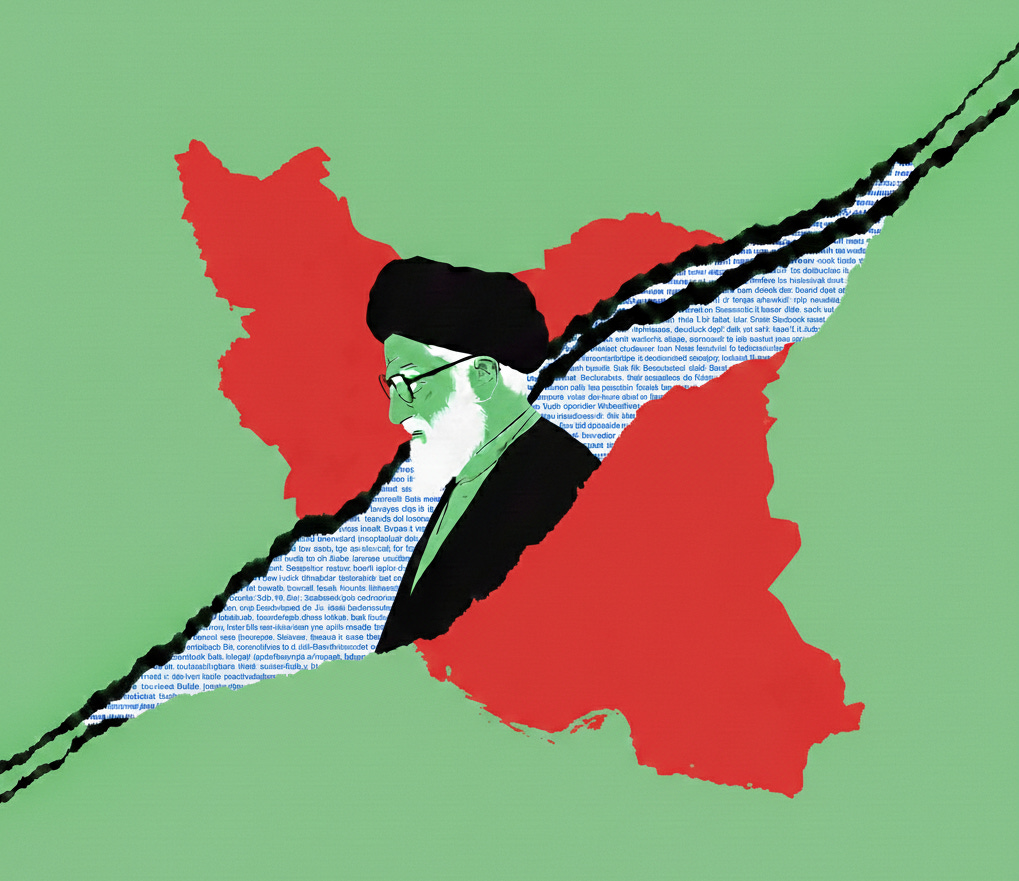
The dual strategy is deliberate. Kinetic violence silences dissent at home. Digital propaganda shapes the narrative abroad. Together, they form what Supreme Leader Ali Khamenei calls “vindication jihad”—a soft war in the information space designed to rewrite reality itself.
An investigation into Wikipedia editing patterns reveals a years-long, coordinated campaign to sanitize the Islamic Republic’s human rights record. According to a 2024 Times investigation, entries have been systematically edited to downgrade Iranian atrocities. Key details about the regime’s 1988 mass executions—including that victims were women and children murdered extrajudicially, and that current senior officials were involved in the death commissions—were deleted. Information about Iranian official Hamid Nouri’s 2022 sentencing to life imprisonment in Sweden for war crimes has disappeared. References to the 2018 expulsion of two Iranian diplomats from Albania for their alleged involvement in a bomb plot against dissidents have been scrubbed.
This matters beyond Wikipedia. When AI systems like ChatGPT are queried about Iranian leaders or events, they often draw from these compromised articles. The propaganda doesn’t stay contained—it flows downstream into the broader information ecosystem that millions rely on daily.
The regime’s reach extends beyond digital propaganda. MI5 and police have disrupted at least 15 plots to kidnap or kill Iranian dissidents in the UK since 2022. When activists like Vahid Beheshti, who has been on hunger strike pressuring the UK government to designate the Islamic Revolutionary Guard Corps (IRGC) as a terrorist organization, attempted to establish a Wikipedia page, the text was repeatedly removed. His wife told The Times: “We believed it was the Iranian cyber army.”
The Mechanics of Memory Manipulation
The operation exploits Wikipedia’s consensus-based structure through sophisticated tactics. Chief among them is what NPOV calls “abrasive deletion”—making small edits over time that gradually erode entire sections. In one edit, context disappears. Two weeks later, someone comes along and deletes the now-contextless information as irrelevant. When anonymous users are challenged, they justify removals by citing the need for “trimming” or claiming material is “trivial”—language that makes the erosion appear like routine maintenance rather than coordinated manipulation.
Source reliability becomes another front in the battle. On the 2017-2018 Iranian Protests page, for instance, editors—including Mhhossein, a prolific pro-regime editor—deleted entire paragraphs about poor conditions in Iran, their reasoning being that the source, Iran News Wire, a dissident outlet, wasn’t deemed reliable enough. The deletion happened in August 2018, months after the protests had ended in January—a kind of ideological mop-up operation that sanitized the historical record once the world had stopped paying attention.
The playbook includes two main tactics that work in tandem, a tactic that appears when coordinated groups act as voting blocs on article “Talk Pages,” outvoting individual editors trying to add verified facts. Authorship dominance allows single editors or small groups to maintain control over 80-90% of an article’s text, camping on pages and reverting any challenges. Anonymous users carry out numerous edits—citing needs for “trimming” or claiming material is “trivial”—making it impossible to determine their motivation, though the pattern of deletions is clear.
A Wikipedia arbitration case has documented editors citing state media outlets like irdiplomacy.ir as sources. The so-called “Gang of 40”—editors working Israel-Palestine topics from a pro-Iranian regime perspective—controls over 90% of dozens of articles.
The Gatekeepers
Two editors exemplify the scope of pro-Iran editing: Mhhossein and Iskandar323.
Mhhossein functions as a historical gatekeeper. He has edited the Ali Khamenei page 217 times—more than any other user—removing information about Iran’s nuclear program and protests. He is the top contributor on Assassinations of Iranian Nuclear Scientists, 1981 Iranian PM’s office bombing, and Ali Khamenei’s fatwa against nuclear weapons.
Mhhossein validated state media sources while deleting information from dissident outlets—including the Iran News Wire deletions from the 2017-2018 protests page months after the events themselves had ended. In total: 2,228 pages edited over 11,000 times.
Iskandar323 operates as a battleground editor focused on active conflicts alongside his edits on past events, editing on the 1988 mass executions as recently as 18 January. Last week, we reported on Wikipedia’s ongoing procedure to site ban him—one of the platform’s most severe punishments—following years of systematic narrative manipulation. Three days after the October 7 atrocities, Iskandar removed thousands of words about human rights abuses, replacing them with a single paragraph. He deleted information about Jewish immigration to Israel, claiming Western expulsion was only relevant to “Jewish History.” He authored 71% of the article on Fascism in the United States, adding multiple images linking American officials to fascist politicians. His reach: 16,000 pages across more than 49,000 edits over more than 12 years.
Three days after the October 7 atrocities, Iskandar removed thousands of words about human rights abuses, replacing them with a single paragraph.
The Live Battleground
Since protests erupted in December 2025, Wikipedia’s 2025-2026 Iranian Protests page has drawn from over 400 sources. Authorship remains relatively distributed—no single editor controls more than 8% (as of time of writing).
But the Talk Page reveals the pressure campaign in real-time. Some argue that calling the Iranian government a “regime” violates neutrality, despite most sources using that term. One editor claims Reza Pahlavi, a prominent opposition figure, shouldn’t be mentioned as notable.
User SwedishDutch disputed reported casualty figures, claiming that two sources that have provided critical coverage of the regime—Sunday Times and Iran International—were unreliable. The SwedishDutch account had been created just two hours previously and has since been deleted.
For now, the page remains well-sourced. But the pattern established in previous cases is clear: once protests fade from headlines—once internet blackouts prevent real-time documentation and bodies are quietly buried—coordinated editors move in to reshape the historical record.
This is what authoritarian information warfare looks like in 2026. There’s violence in the streets to silence dissent in real time. Then come the internet blackouts, preventing real-time documentation and cutting off the flow of evidence to the outside world. And once the immediate crisis fades from international attention—once bodies are quietly buried and the news cycle moves on—the propaganda operation moves in to systematically rewrite what happened. The Islamic Republic isn’t just killing protesters. It’s erasing the evidence that they existed at all.
Wikipedia’s open editing model was designed to democratize knowledge. On Iran-related topics, it has become another battlefield where the most persistent and coordinated voices can overwrite truth. The encyclopedia that millions trust has become, in these corners, an extension of the regime’s propaganda apparatus.
The edit histories are public. The question is what Wikipedia—and the platforms that rely on it—will do about it.
What follows is primary-source documentation underlying this reporting.