

For years, Wikipedia was known as the world’s first crowdsourced encyclopedia, a new kind of knowledge repository that prioritizes neutrality. What most people don’t know, however, is that beneath the site’s minimalist interface lies a cauldron of edit wars, turf battles, ideological grifting, and outright propaganda.
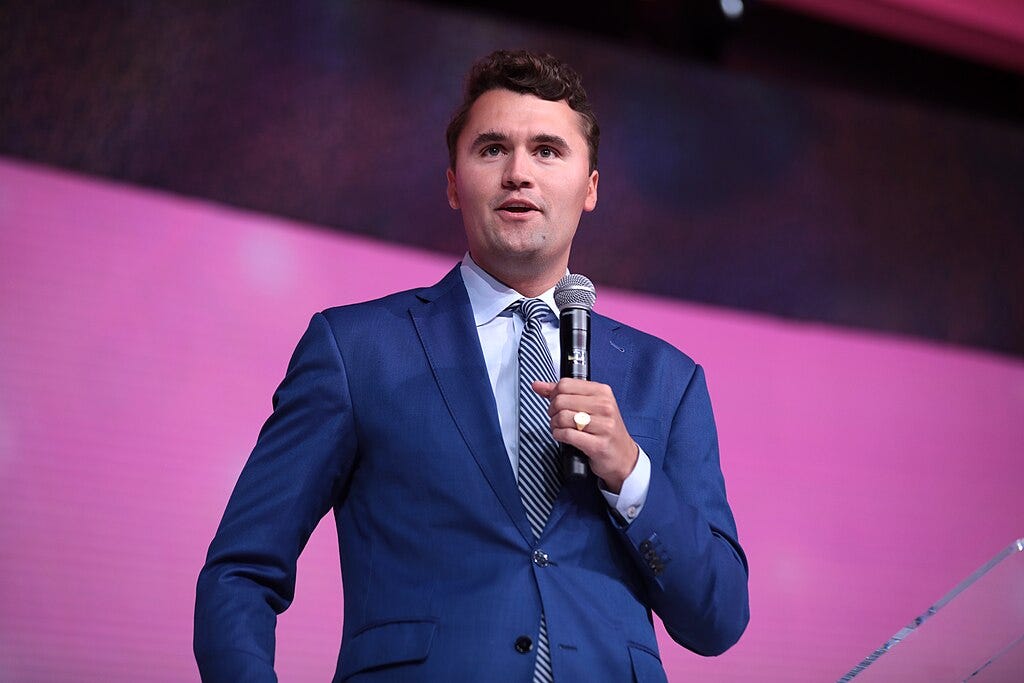
Take the case of Charlie Kirk. Last week, NPOV founder Ashley Rindsberg had an analysis piece in Fox News, dissecting the Wikipedia entry on the celebrated activist. A quick glance at Kirk’s entry doesn’t reveal much. But a deeper, forensic dive tells a different story.
In the piece, Ashley notes that from the very first sentence a clear framework emerges the moment Wikipedia calls Kirk “right-wing”:
“That may seem unobjectionable in itself, but a look at Wikipedia articles on comparable figures from the left reveals no such politicized framing.”
Ashley shows how entries on major Democratic Party figures like former Obama advisor David Plouffe and activist Al Sharpton bear no such political label identifying them as leftwing.
There are more serious issues with Kirk’s Wikipedia entry, including editors’ decision to tar Kirk as a “conspiracy theorist” and call him “hard-right”—without providing any evidence. While this is concerning, the deeper point comes towards the end of the piece:
At its core, Wikipedia is a wrapper for the mainstream media. Its infamous "Reliable Sources" list of news outlets that can be used as references and sources Wikipedia editors consider to be "reliable" as green and those they deem "unreliable" as red. The green sites read like a semi-official list of the mainstream media: New York Times, Washington Post, CNN, NBC News, CBS News, ABC News, Associated Press. It disproportionately marks conservative outlets as unreliable, while giving a neutral rating to the Chinese propaganda outlet China Daily.
It’s precisely this point that Ashley covers in a wide-ranging interview with one of Britain’s leading podcasters, Andrew Gold. In the interview, Ashley speaks to the question of Wikipedia’s outsized influence on our information ecosystem.
The interview covers everything from the role a small cadre of Hillary Clinton advisors played in reshaping Wikipedia, to editors’ attempt to cast the UK’s grooming gang scandal as a “moral panic.” The interview also touches on Wikipedia’s effort to delete the article on the murder of Ukrainian refugee Iryna Zarutska on a train in North Carolina.
NPOV subscribers get early access to the full-length interview, which has not yet been publicized. Watch the full interview below.
Thank you for your support. Stay tuned for more investigative reporting—and please share this post with two people who know. We appreciate it!
I noticed Wikipedia's obvious bias seven or so years ago, and since then have always scrutinised what I read there. It is the same with AI engines like ChatGPT, Grok, Perplexity: you always have to check its output. When you sharpen a knife you test it by cutting a tomato or checking for the absence of a burr. I do not think it is possible to create an entirely neutral information repository. For example we do not know if President Kennedy was assassinated by Lee Harvey Oswald alone, or with the help of other assassins. An article could relate the best known facts, but point out where these facts are not certain or where there are alternative perspectives.
Shocked that anybody thinks Wiki is an accurate source about anything. Of course being a Jew they've been lying about us for years.