


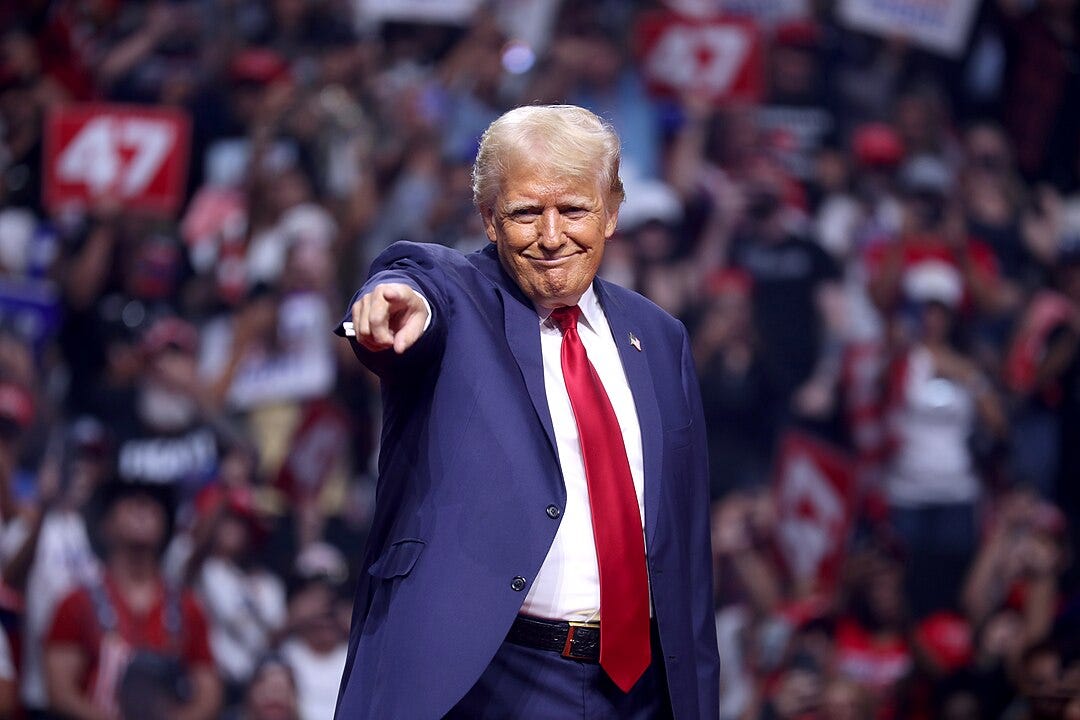
In two recent Fox News pieces, I reported how Wikipedia has quietly re-engineered the political record—beginning with the former president of the United States.
The first piece is an investigation into how Wikipedia’s role as the world’s “knowledge infrastructure” translates into anti-Trump political activism—and possibly election interference.
For the second piece I sat down with Wikipedia co-founder Larry Sanger for a lengthy interview shortly after he released his “Nine Theses,” a series of essays examining where Wikipedia went wrong, and what to do about it.
My investigation into Wikipedia’s targeting of Trump revealed that across multiple entries—including Donald Trump, Presidency of Donald Trump, Authoritarianism in the United States—Wikipedia labels Trump “authoritarian” and a driver of “democratic backsliding.”
It’s not just these terms that are repeated, but the same sentence verbatim used in article after article to build this case. The articles assert that Trump’s actions “have been described as authoritarian and contributing to democratic backsliding.” The phrasing appears nearly identical across pages, creating the illusion of consensus when in reality it originates from a handful of editors and a single recurring source.
Tracing those edits revealed a pattern. One prolific user—BootsED—repeatedly inserted the same “authoritarian” framing, almost always citing a single Guardian article from April, titled, “Fear spreads as Trump targets lawyers and non-profits in ‘authoritarian’ takedown.”
BootsED is responsible for nearly 95% of an article—an article created by that same editor—called Targeting of political opponents and civil society under the second Trump administration, which also pushes the “authoritarian” narrative. Seven of BootsED’s top 10 most edited articles are Trump-related.
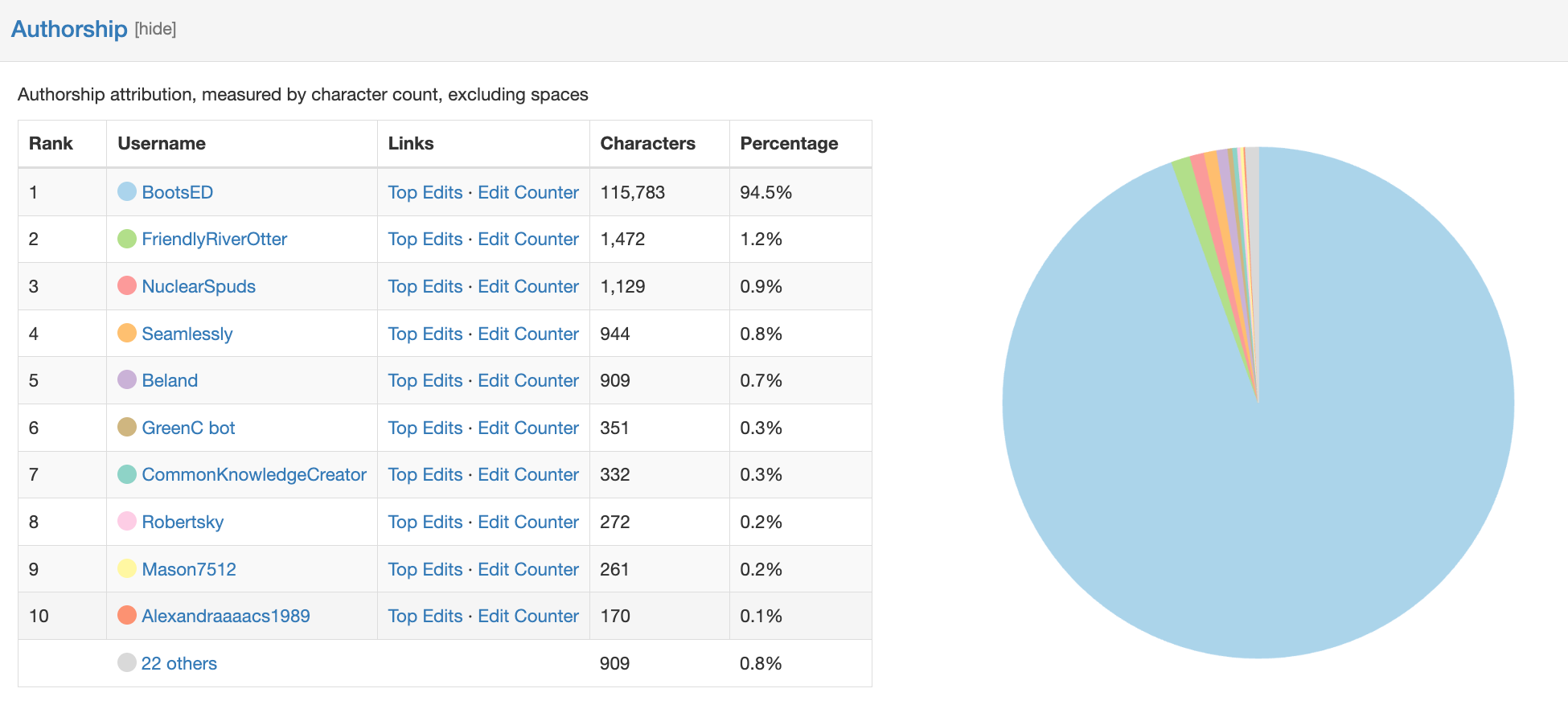
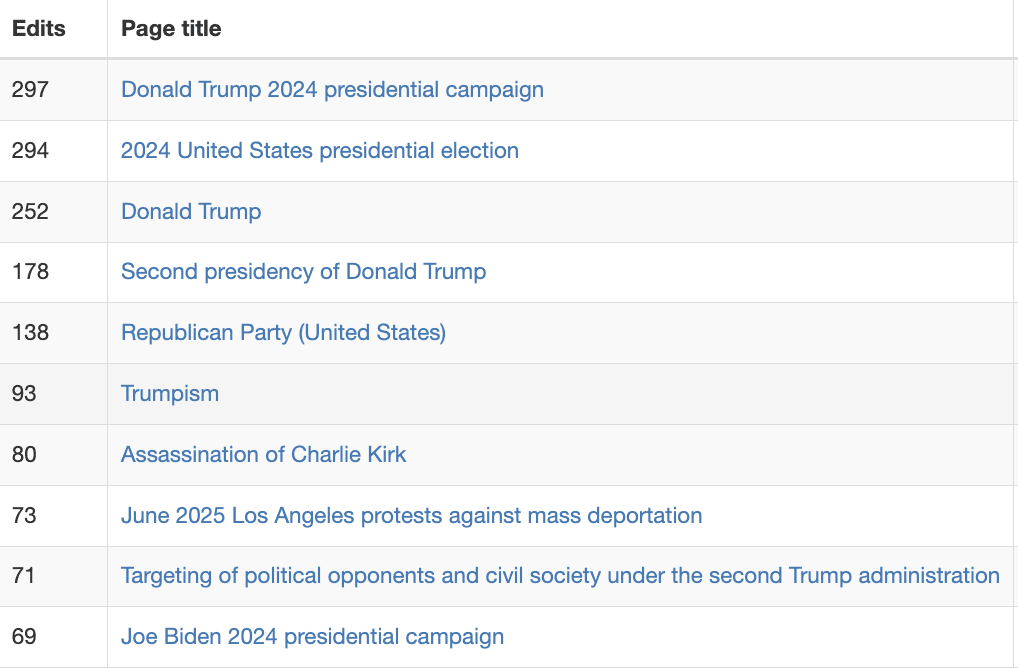
Despite what appears to be clearly agenda-driven editing by BootsED, this single editor is responsible for seeding the idea that the US president is an “authoritarian” (or pulling the country in that direction)—an idea that has now filtered down to ChatGPT, Google and other downstream platforms.
That Guardian story has become the foundational reference for one of Wikipedia’s most politically charged claims. But the Guardian piece was not an act of independent journalism. It was produced as part of a special series funded by the Open Society Foundations (OSF), the global network founded by George Soros. In other words, an advocacy-backed media project became Wikipedia’s principal citation for defining Trump as authoritarian.
That Guardian piece relies heavily on commentary from Harvard professor Steven Levitsky, co-author of How Democracies Die, who told the paper, “Trump has a strikingly authoritarian instinct.” What the Guardian didn’t tell readers, however, is that Levtisky is an advisor to Protect Democracy, an NGO founded by former Obama White House assistant counsel Ian Bassin.
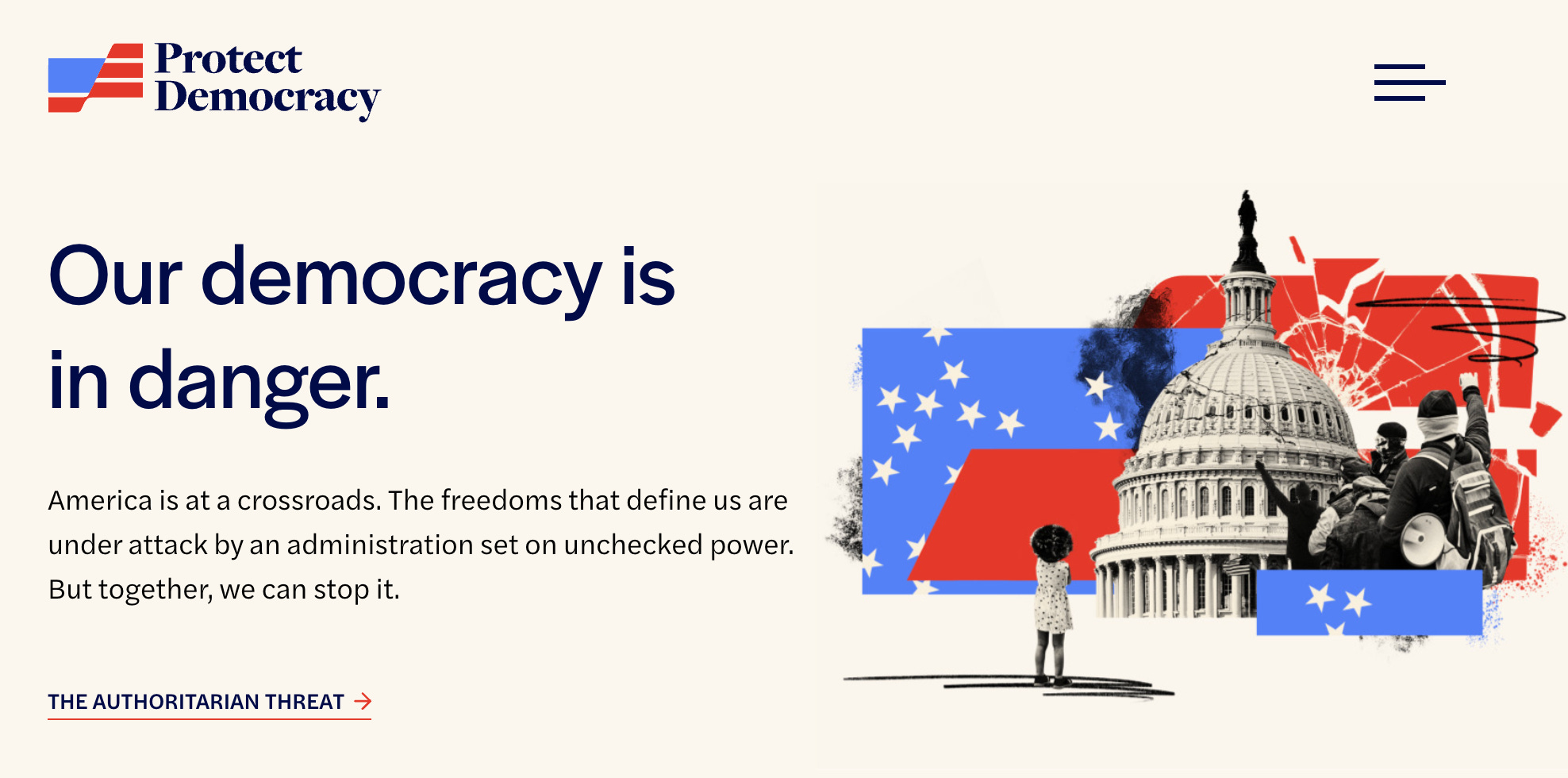
Protect Democracy lists its campaign, “The Authoritarian Threat” at the very top of its website, where it is the only link in that top-most part of the site.
Wikipedia editors’ decision to cite a Guardian article sponsored by Open Society Foundations did not take place in a vacuum As I reported for Pirate Wires in a piece this January, Wikimedia Foundation (WMF), which owns and governs Wikipedia, has for years been led by individuals drawn directly from Soros-funded or Soros-linked institutions. This includes Eileen Hershenov, the longtime former Open Society Foundations general counsel who later became WMF general counsel; Ethan Zuckerman, who served not only on OSF’s Global Board (alongside George Soros and Alex Soros) but also chaired its Information Program, and later joined Wikimedia’s Advisory Board; former OSF Fellow Rebecca MacKinnon who is now Wikimedia’s Vice President for Global Advocacy—and many others. (There were so many we had to make a chart.)
In 2018, George Soros personally donated $2 million to the Wikimedia Endowment. “My gift represents a commitment to the ideals of open knowledge,” Soros said, referencing his political philosophy that revolves around building what he calls open societies, “and to the long-term importance of free knowledge sources that benefit people around the world.” Then-executive director Katherine Maher praised his “deep commitment to supporting openness in all its forms.”
Check out my NPOV video below to learn more about how this works:
Exclusive Interview: Wikipedia Co-founder Larry Sanger
When I sat down for a lengthy interview with Wikipedia co-founder Larry Sanger, his assessment was. What began as an open collaboration among volunteers, he explained, has become a “bureaucracy” in which a small number of insiders dictate what counts as truth.
Here’s what Larry told me:
Wikipedia simply represents as the consensus position whatever the most powerful people on the platform say is the case. If it really represents a consensus of anything, it is the consensus of everyone who thinks in the approved way, which is a very narrow sort of consensus, like a scientific consensus. The way that Wikipedia seemed to think of scientific consensus is simply an average of the views that can be found in very few journals and excludes the views of a lot of, you might call them dissenting scientists, as if they didn’t even exist. It is very problematic, and it is the reverse of a consensus.
At the core of Wikipedia is a worldview Larry calls the GASP consensus—Globalist, Academic, Secular, Progressive.
He described how Wikipedia’s “reliable sources” policy, once a practical guideline for quality control, has hardened into an ideological filter: only establishment outlets are allowed to define reality.
Perhaps most importantly, Larry spoke to the dangers of having a tiny group of around 62 highly powerful, but anonymous, power users making the most decision on the site. These users include the site’s Bureaucrats (who can deputize new admins), CheckUsers (who have access to user data like IP addresses), and ArbCom (the site’s “Supreme Court). This Power 62, as Larry calls them, have immense power but, despite this, little accountability.
Sanger’s warning is not abstract. Wikipedia’s power extends far beyond its website: its content feeds search engines, classroom materials, and the AI models that increasingly mediate what people know.
The full interview with Wikipedia co-founder Larry Sanger will be released to subscribers next week. Subscribe below if you haven’t already. Follow us on Instagram for more great Wikipedia-focused video.
I'm curious if anyone in the Trump orbit is fighting to get these declarations removed or at least trying to expose the Sorosphere's involvement in Wikipedia or if they're even aware.