


Editor’s note: If you value reporting that exposes how digital systems quietly shape reputations, subscribe to NPOV and share this piece.
Propaganda has long been one of the most prized weapons of the Islamic Republic of Iran (IRI). Manipulating not just information but perception, the regime has managed to offset outdated military hardware and limited strategic projection while cloaking its central strategy: maintaining a regional network of proxy militias across the Middle East.
Nowhere has this approach to information been more visible than on Wikipedia.
In January, NPOV reported Inside Iran’s Wikipedia War, exposing a network of IRI-aligned editors quietly reshaping hundreds of articles related to the Iranian regime. A second NPOV investigation revealed the mass upload of more than 10,000 images and videos tied to the 2025–2026 protests onto Wikimedia Commons, Wikipedia’s global media repository. The files were sourced from Iranian state outlets including the IRGC-linked Tasnim News Agency, Mehr News Agency, and Ayatollah Ali Khamenei’s official website, Khamenei.ir.
Together, the uploads saturated search results for the protests with regime-produced material — funeral processions for security forces, footage depicting protesters as violent rioters, and speeches by senior Iranian officials.
Read: Inside Iran’s Wikipedia War
Newly examined records now show that senior figures within Persian Wikipedia were in direct dialogue with Iran’s censorship authorities.
In September 2018, several senior volunteers from the Persian-language edition of Wikipedia participated in a recorded strategy meeting held in collaboration with Iran’s Ministry of Culture and Islamic Guidance, the government body responsible for regulating media and issuing publishing licenses, according to a 2019 report by openDemocracy.
Among the Wikipedia participants was Mohsen Salek, introduced at the event as a senior manager and bureaucrat of Persian Wikipedia. Representing the government was Hamid Ziaei Parvar, head of the ministry’s Bureau of Media Studies and Planning.
During the discussion, panelists addressed how politically sensitive content about Iranian officials should be handled on the platform. At one point, Salek compared the authority of Wikipedia administrators to the ministry’s own censorship apparatus, Vezarat-e-Ershad, which oversees all licensed media inside Iran:
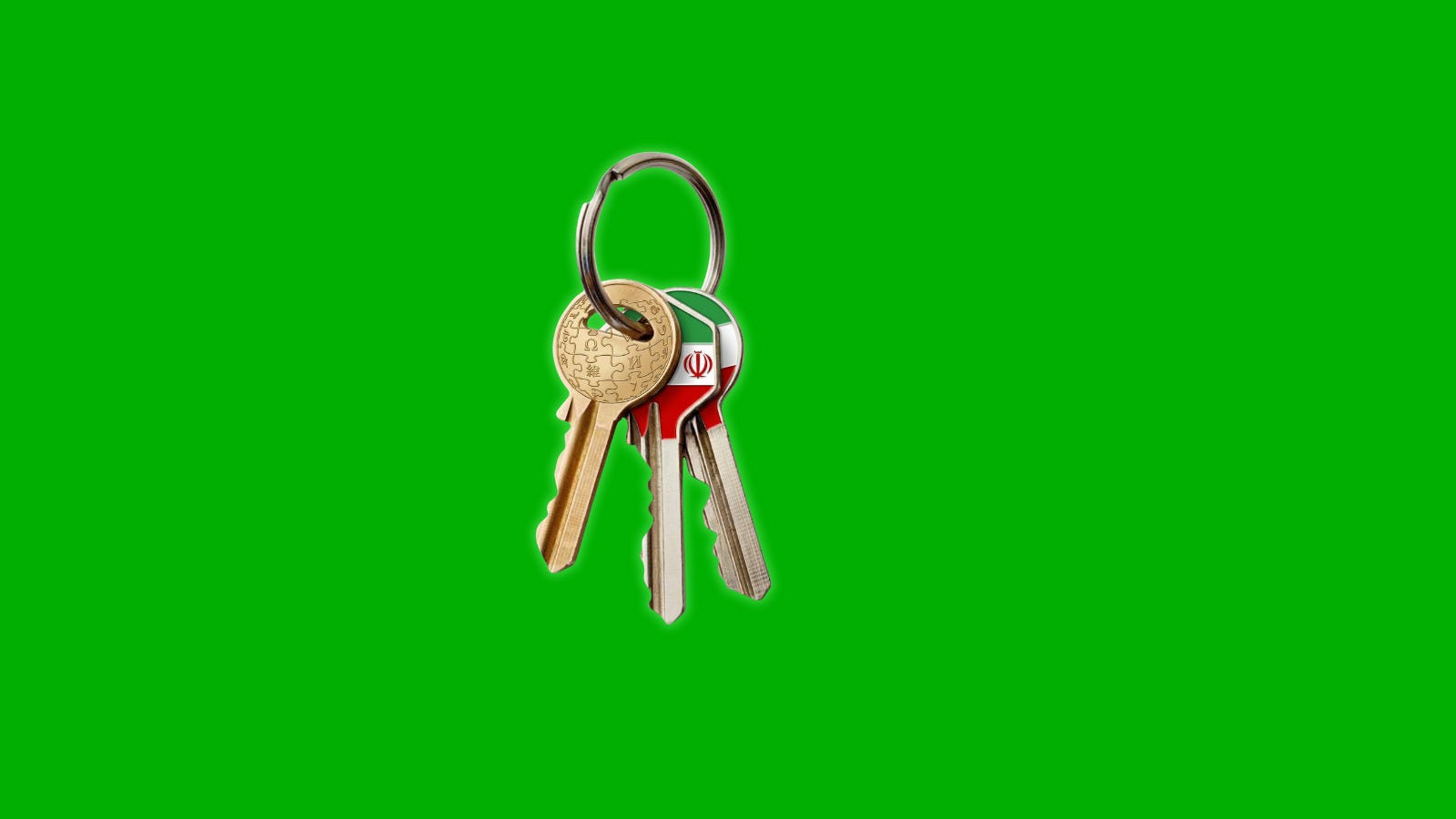
“…these guys here play the role of Vezarat-e-Ershad in Wikipedia… They can close one account, open another, give warnings. They are even stronger than Vezarat-e-Ershad. They have the keys in their hands.”
Participants also discussed locking pages about Iranian officials to prevent what they described as “attacks,” and suggested that information about individuals should not appear on Wikipedia unless it had already been widely reported and verified by Iranian state media outlets.
According to the openDemocracy report, at the close of the meeting, Parvar offered Persian Wikipedia an official base inside the ministry and assistance registering as a non-governmental organization through the Ministry of Interior. While no public record shows the proposal was formalized, the offer illustrates how Iranian officials themselves envisioned the relationship.
Questions about Persian Wikipedia’s vulnerability to state-aligned influence had already surfaced. In 2019, researcher Sina Zekavat found that politically sensitive articles on Persian Wikipedia diverged significantly from their English-language counterparts. Entries dealing with Iran’s regional interventions relied more heavily on state-linked sources and often framed controversial issues in ways aligned with Tehran’s official narrative.
While these differences alone do not demonstrate coordinated influence, the 2018 meeting shows that senior Persian Wikipedia figures were in direct contact with Iran’s censorship authorities.
Following Zekavat’s reporting, the Wikimedia Foundation stated it had reviewed the claims with Farsi-speaking volunteers and concluded that “a number of the claims” were unsubstantiated. The Foundation did not specify which claims were dismissed or the scope of the review.
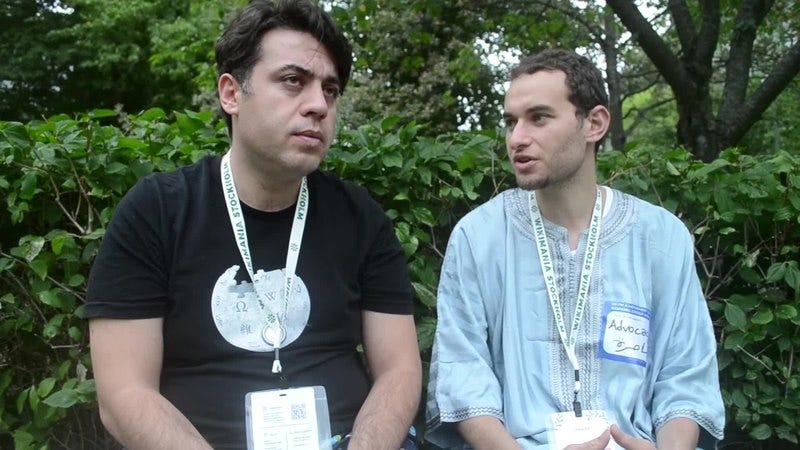
In 2019, Mohsen Salek also participated in discussions shaping the Wikimedia Foundation’s 2030 global strategy, appearing at Wikimania in Stockholm as part of the process.
This sequence of events is highly consequential. Wikipedia consistently ranks at or near the top of search results for information about Iran, sanctions, and the country’s political leadership. Its credibility depends on the perception—and reality—of neutrality.
The 2018 meeting does not prove that Persian Wikipedia became a state-directed operation. But the documented record shows that senior editors met with Iran’s censorship ministry at a key moment, with a leading administrator going so far as to compare Wikipedia’s authority to that ministry. Discussion of state media served as an editorial benchmark, and the government offered to provide institutional support.
The downstream effects of that proximity are visible in the edit histories documented in NPOV’s earlier investigations.
In Inside Iran’s Wikipedia War, NPOV documented a sustained pattern of edits that consistently moved Iran-related articles in the same direction: less emphasis on regime abuses, fewer independent sources, and increased reliance on state-linked framing.
One of the clearest examples was the Wikipedia page for Ayatollah Ali Khamenei. A user operating under the name Mhhossein emerged as a long-term gatekeeper on the entry, editing the page 217 times—more than any other editor. Across Wikipedia, Mhhossein’s activity spans 2,228 pages and more than 11,000 edits, with heavy concentration on topics central to the Islamic Republic’s political narrative, including Iranian nuclear policy, political assassinations, and the Supreme Leader himself.
NPOV’s reporting also identified repeated removals of material documenting the regime’s human-rights record. References to key details of the 1988 mass executions—including evidence that women and minors were among those killed extrajudicially—were deleted from some entries. Information about Hamid Nouri’s 2022 life sentence in Sweden for war crimes disappeared. References to the 2018 expulsion of Iranian diplomats from Albania over an alleged bombing plot against dissidents were scrubbed.
Many of these changes followed a pattern we know as “abrasive deletion”: small edits gradually stripping context until the remaining information was later removed as redundant or trivial.
A separate NPOV investigation found that the same narrative struggle extended beyond text into Wikipedia’s global media pipeline.
Over a period of weeks, more than 10,000 images and videos connected to the 2025–2026 protests were uploaded to Wikimedia Commons, the repository that supplies media to Wikipedia articles across hundreds of languages. The files were sourced from Iranian state outlets including Khamenei.ir, the official website of the Supreme Leader; Mehr News Agency, owned by a regime-linked ideological organization; and Tasnim News Agency, an outlet tied to the Islamic Revolutionary Guard Corps and sanctioned by the United States.
Search results for terms such as “Iran protests,” “Iran protests 2026,” and “Khamenei” increasingly returned this material. Out of thousands of media results, only a small number were not produced by Iranian state outlets.
The uploads were driven largely by a single Wikimedia Commons account known as 999real, which has fewer than 1,000 edits on Wikipedia itself but more than one million edits on Wikimedia Commons. Although the account was created only in November 2023, it quickly became the third-largest contributor to the Wikipedia article on Tasnim News Agency.
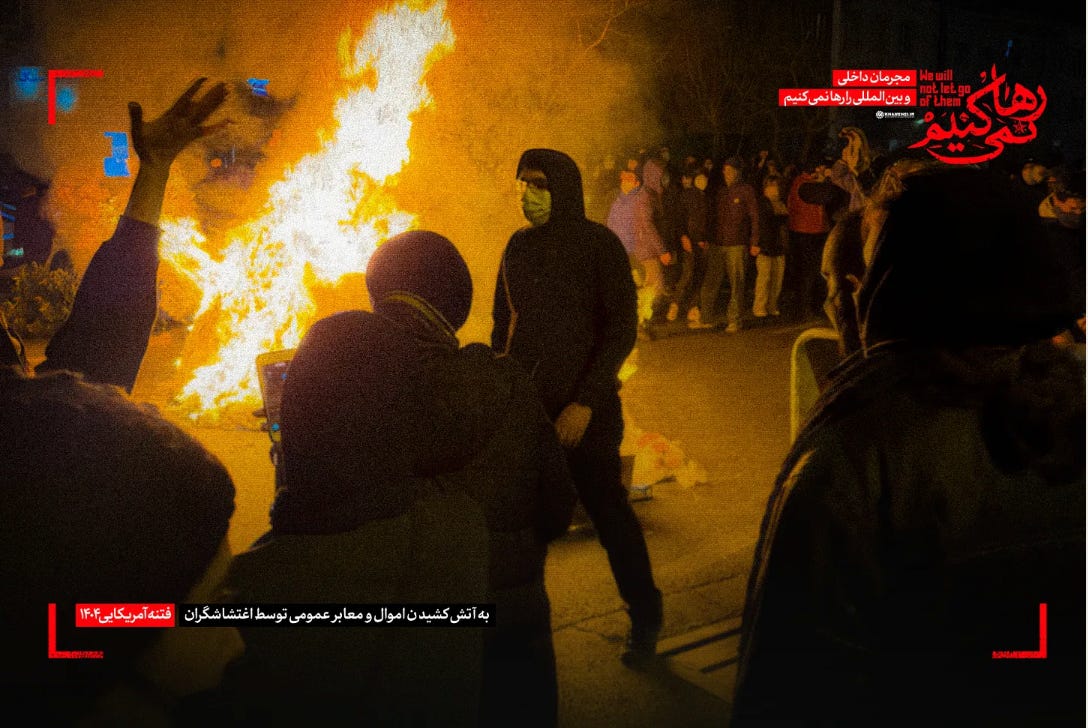
The content carried unmistakable messaging. One video widely surfaced in protest-related searches—bearing a Khamenei.ir watermark—opens with a crowd chanting “Marg bar Āmrikā” (“Death to America”) and cuts to demonstrators holding signs reading “Down with Israel.” Other clips depict protesters as violent rioters, show burned mosques and damaged Qurans, and feature speeches by senior regime figures praising pro-government rallies.
Commons attribution links direct viewers back to the originating outlets, including Khamenei.ir and Tasnim.
Whether these uploads were coordinated by Iranian authorities or carried out by individuals sourcing from state media remains unclear. What the record shows is that Iranian government media entered Wikipedia’s content ecosystem at scale during a period when journalists were blocked from reporting inside the country and internet access was severely restricted.
It is against this backdrop—years of contested edits, mass media uploads, and narrative battles across the platform—that the 2018 meeting between senior Persian Wikipedia figures and Iran’s censorship ministry takes on greater significance.