


Editor’s note: If you value reporting that exposes how digital systems quietly shape reputations, subscribe to NPOV and share this piece.
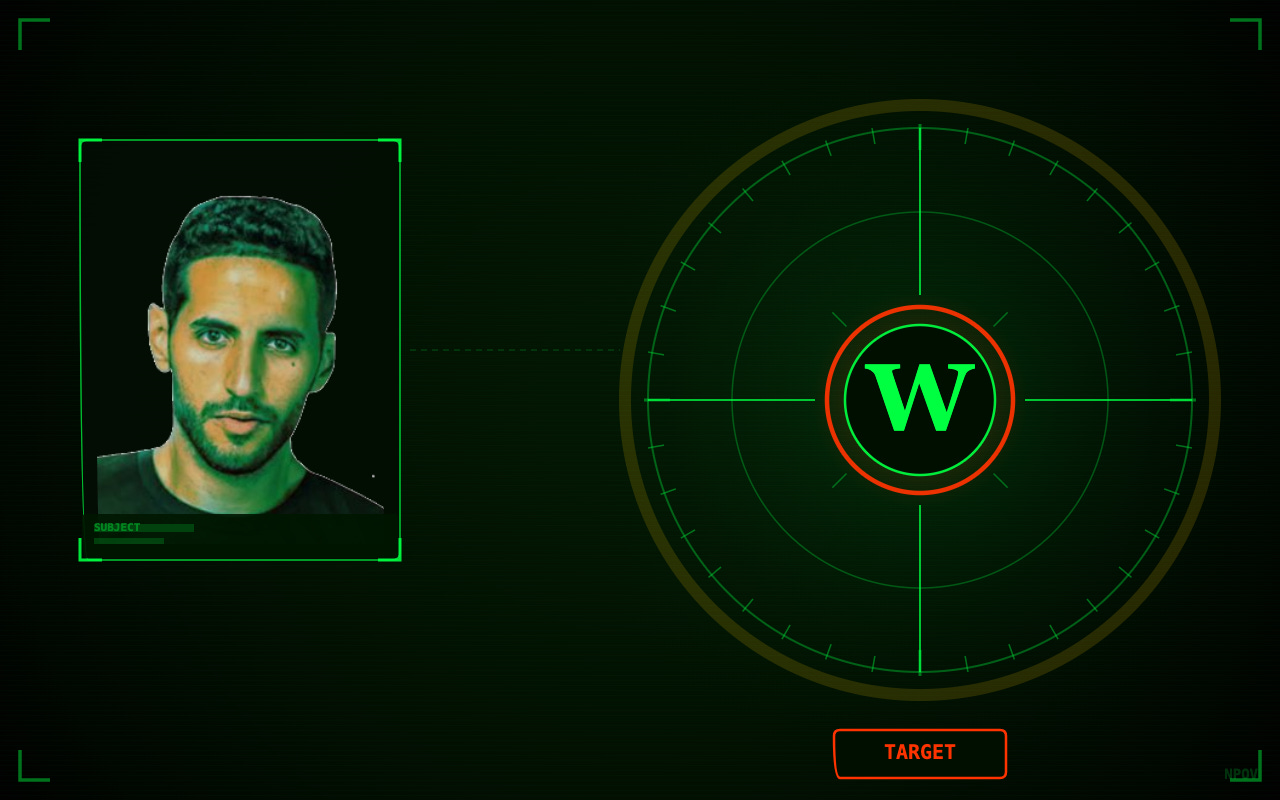
NasDaily has built an audience of tens of millions of people around the world as the creation of Nuseir Yassin. Over the past decade, Nuseir has built something far larger than a content channel. What began as a personal storytelling project—one man publishing daily one-minute videos—expanded into a global media and technology enterprise, backed by major investors and designed to support the next generation of online entrepreneurship.
His platform, Nas.io, allows entrepreneurs to launch businesses, sell products, and build audiences of their own. According to Nuseir, companies employ well over a hundred people. His audience stretches into the tens of millions.
But you wouldn’t know this from reading the Wikipedia page for NasDaily.
Instead, the entry on the world’s largest knowledge platform presents something recognizably connected to Nuseir, but unmistakably diminished. It identifies him primarily as a “vlogger,” a content personality defined by the act of recording and publishing videos. And it strips one of the most consequential Israeli-Arab entrepreneurs of control over his own identity.
Today, Nuseir is working to show the world what happened to his Wikipedia entry—and why. In January, Nuseir released a video titled "My Wikipedia Got Stolen” detailing the narrative campaign against him on the site. In a post on X, he went so far as to write, “Shut down Wikipedia. And seek the truth with Grokipedia.”
This was no knee-jerk reaction by an anti-Wikipedia crusader. Far from it. Over the years, Nuseir and the NasDaily channel have been one of Wikipedia’s greatest champions. In 2023, Nuseir traveled to London to make a video featuring Wikipedia co-founder Jimmy Wales. He has also donated to the site and encouraged his followers to use it.
A Narrative Campaign Unfolds
But in recent months, following a sustained effort to revamp his Wikipedia page, Nuseir (like so many others who have been in this position) began to see the site, and its core mechanisms, in a very different light.
While consequential, the shift to the NasDaily page did not arrive as a dramatic rewrite. Instead, it happened through a process of slow accumulation. Over the past two years, a series of incremental edits altered the structural balance of the page. This is the most common approach to this kind of ideologically-driven revision of an entry: a phrase gets replaced, a descriptor is narrowed. No single edit ever appears decisive. But together, they reshape how the subject gets presented to readers—and the digital platforms that sit downstream of it.
In NasDaily’s case, the change is visible from the very first sentence, which describes Nuseir as an “Israeli-Palestinian vlogger who is most notable for creating over 1,000 daily, one-minute-long videos.” The sentence, which contains no obvious falsehood, performs a powerful act of compression by defining Nuseir by the earliest phase of his career. It presents him as a person who made a large number of videos, rather than as an entrepreneur building companies, raising capital, and employing teams to build products used by others.
While this might sound like a small difference, for Nuseir it’s about as important a misrepresentation as possible, akin to having the last decade of a career and professional trajectory arbitrarily deleted. If it were simply the product of error or a page that hadn’t been maintained, that would be one thing. But in this instance, that—as we’ll see—is evidently not the case.
The ideological revision of the NasDaily entry doesn’t end with the reduction of Nuseir’s professional life, but cuts to the very heart of who he is as a person. Earlier versions of the article reflected the complexity of how Nuseir understood his own identity. He described himself publicly as Palestinian-Israeli, an attempt to reconcile the overlapping realities of his birth, citizenship, and ancestry.
All this changed for Nuseir the day after the October 7 atrocities perpetrated by Hamas.
On October 8, 2023, Nuseir published a statement on X reflecting a shift in how he understood his vulnerability and belonging. The violence forced him to confront questions of safety in ways he had not previously experienced.
“I realized that if Israel were to be invaded like that again, we would not be safe,” he wrote. “Which means I only have one home. Israel.”
This was a personal conclusion, not a renunciation of his past history or other elements of his personal identity as an Arab man.

An Unseen Ideological Engine
The question is why this provoked the response it did on Wikipedia. The answer is that, for decades, Nuseir has been a vocal proponent of normalization between Israel and the Palestinians. This, for him, is not as a political slogan, but a lived reality and a necessary condition for peace.
“The fact is I do have a normalizing agenda,” Nuseir told me in an exclusive interview. “In other words, I believe in a peaceful two-state solution between two people at war for the last seventy-five years.”
But for editors active on his Wikipedia entry, normalization is positioned as an ideological stain. This is achieved by presenting the idea of Israeli-Palestinian normalization—one the centerpiece of liberal geopolitical thought—through the frame of the global campaign to delegitimize Israel, the Boycott Divestment and Sanctions (BDS) movement.
Midway through, the article introduces one of Nuseir’s key initiatives, Nas Academy, a digital platform where people can learn how to turn content creation into a successful business, as the subject of controversy. Editors inserted the sentence:
The Boycott, Divestment and Sanctions campaign claimed that the training programme was aimed to encourage normalization of relations with Israel.
The sentence appears clinical, sourced, procedural. But its inclusion performs a specific function. It establishes normalization not as a neutral fact about Nuseir’s worldview, but as an accusation brought against him by a political campaign organized explicitly to oppose normalization itself.
Wikipedia Shifts Left
This shift against Nuseir reflects a broader change on Wikipedia. In the first decade or so of its existence, the platform largely embraced center-left liberalism. This was driven by a belief in classic liberal ideals, like open discourse, objectivity, and a sense that conflict can be resolved through consensus.
But over the past decade, Wikipedia has undergone a marked shift in its internal politics, lurching dramatically leftward. Part of this shift was precipitated by Wikimedia Foundation’s Movement Strategy, a long-term vision to re-form the organization’s mission from building an online encyclopedia to serving as a global social justice movement rooted in what it calls “knowledge equity.”
Along with it, ideological dynamics on articles and Talk pages similarly underwent a transformation. The kind of political normalization between Israel and Palestine that Western liberalism had positioned at the very center of its geopolitical project for decades was swapped out by a BDS-driven ethos that seeks to implement a zero-sum approach to the conflict—not in Israel’s favor.
In the context of this shift, Nuseir’s persistent advancement of normalized relations between not just Israelis and Palestinians but the broader Arab world became a threat to the new leftward ideological framework on Wikipedia. That he is one of the most prominent and credible Israeli-Arabs online today made this even more pointed.
The changes to Nuseir’s Wikipedia mirror these shifts. But the shift has been subtle, taking an incrementalist approach to revision favored by most veteran editors. He began to notice that the center of gravity of his page had shifted. Developments that reflected the scale of his work—new ventures, expanded teams, technological platforms—appeared inconsistently or without prominence. The biography began to describe what was said about him rather than what he had built.
▶ Watch the 90-Second Explainer
What happened to Nuseir reveals how quietly digital reputations can be rewritten.

When we spoke, he described the dissonance plainly. “I have a hundred people in my company,” he said. “I’ve raised tens of millions of dollars. I built four companies. But if you read my Wikipedia, you think I’m a one-person operation making videos.”
“I have a hundred people in my company. I’ve raised tens of millions of dollars. I built four companies. But if you read my Wikipedia, you think I’m a one-person operation making videos.”
Defamation Anon
Nuseir is by no means alone. Every week, NPOV hears from people who have experienced the same effect. In some cases, the targeting is clear-cut, even out in the open. In others, it’s far more opaque. Some narrative campaigns on the site are driven by a single overzealous editor on a private, unseen mission. In other cases, it’s the product of widespread, highly complex coordination.
Read: How health journalist Max Lugavere was smeared by a self-proclaimed “vegan activist.”
What unites them all, however, is the sense that these people not only have no recourse, but that no one is even listening. Reputations that have been built over the course of decades are tarnished in a matter of minutes. The attacks are public and permanent, but the people carrying them out are protected by Wikipedia’s system of anonymity.
With Google propagating these attacks to the top ranks of its search results, and AI training on Wikipedia data, the narrative campaigns built on a single website get universalized across the internet. Once out there in the wild, they are there to stay—a kind of slow, seeping damage that’s impossible to reverse.
Watch the full interview with Nuseir Yassin below. Subscribe to NPOV for more powerful investigations.
You guys are doing a great job of uncovering the bias on the social knowledge platforms amazing unbelievable and scary.
"..a belief in classic liberal ideals, like open discourse, objectivity, and a sense that conflict can be resolved through consensus..."
It might have pretended to be that...for a brief time...
Wikipedia is now a garbage dump of Cultural Marxists aligned with Big Pharma.
An excellent book on the core of the problem is "Psi wars,Ted, Wikipedia and the battle for the planet by Craig Weiler.