



“Where did this year go?” We’ve all had that feeling. Some of us have it every year. In NPOV’s case, it’s hard to believe that we only launched three months ago. Since then, we’ve taken a deep dive into Wikipedia, bringing to light a very different picture about the world’s most influential information repository than the feel-good version we’ve heard about from the media for 20 years.
Wikipedia has told a compelling story about neutral, crowdsourced information—a virtual panacea to the timeless human conundrum concerning truth and falsehood. The problem is the story itself glosses over reality: the site is replete with narrative hijacking, edit gangs, information cartels, and pervasive bias.
The grittier, grainier story we’ve started to tell over these months is about how Wikipedia actually works. We’re doing it case by case, wherever we find bias, ideological editing, or attack campaigns.
We’ve traced how a small handful of editors turned the democratically elected president of the US into an “authoritarian”—a term they refuse to invoke when it comes to actual authoritarians, like the Supreme Leader of Iran.
We’ve shown how Wikipedia editors revised the truth about a group of Jewish Australians who were victims of a mass doxxing event in 2024—part of a cadence of digital attacks against the country’s Jewish community that culminated in the Bondi Beach massacre this month.
We’ve shown how journalist Andy Ngo was defamed, as ideological combatants aligned with his literal, physical attackers concretized unsourced, unsubstantiated allegations that he’s a “far-right influencer” into so-called fact.
We’ve also shown how none of this is new: early in the site’s lifecycle, one of America’s most prestigious journalists, John Seigenthaler, was defamed when an anonymous editor alleged that he played a role in the assassination of John F. Kennedy and Robert Kennedy (the latter of whom was a personal friend of Seigenthaler’s).
We’ve reported on the “pandemonium” that erupted when Jimmy Wales decided to step into the Talk page of the grossly biased “Gaza genocide” entry, which earned Wales a referral to Wiki-court.
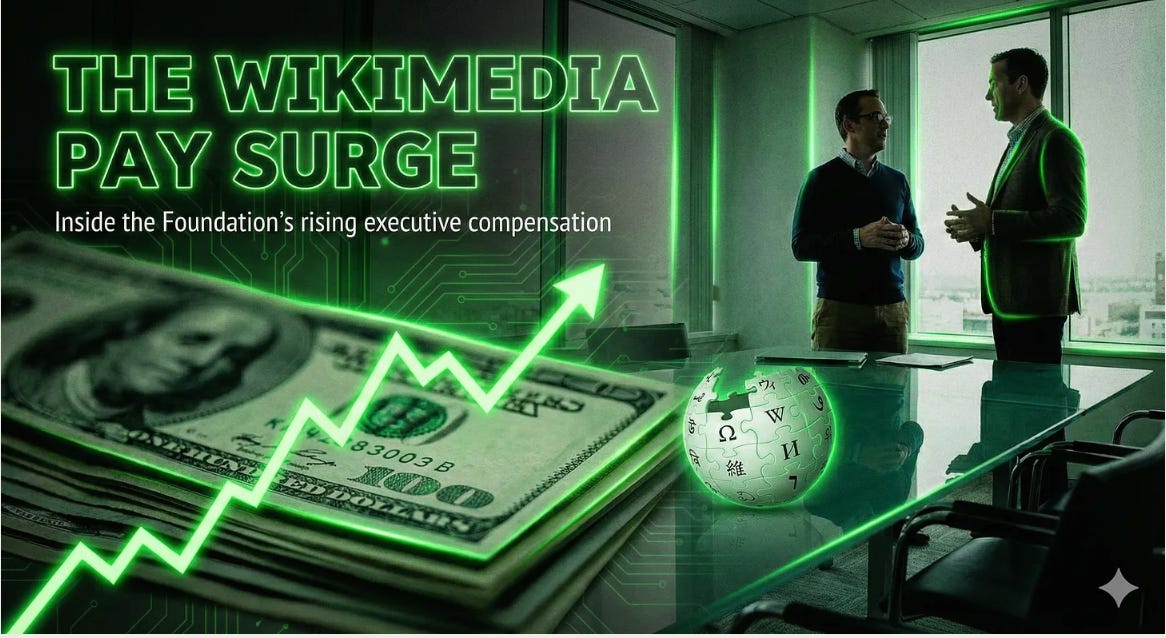
And we’ve shown how Wikimedia Foundation executives have grown their salaries at a staggering rate—756% over a two-decade period, to be exact (compared with a 66% national average in the same timeframe).
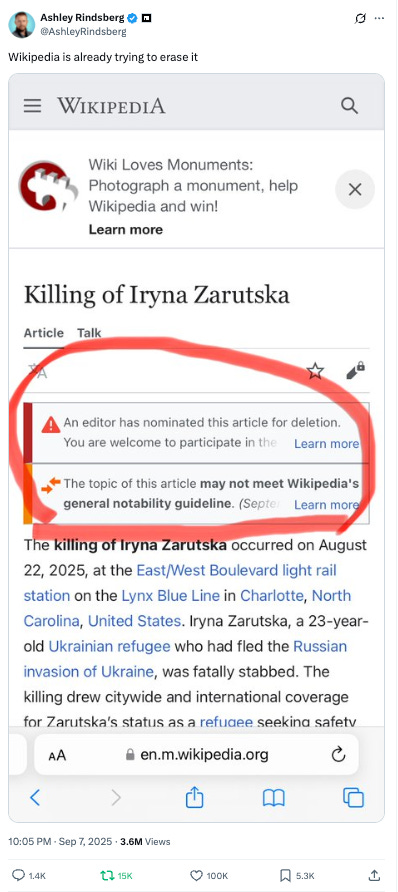
We’ve produced dozens of videos on X and Instagram. And we created more than one news cycle on social media, including with a post on X about Wikipedia’s attempt to delete the entry on the murder of Ukrainian refugee Iryna Zarutska—a post that eventually racked up 103,000 likes and 3.4 million views—and why Wikipedia was working so hard to smear Charlie Kirk.
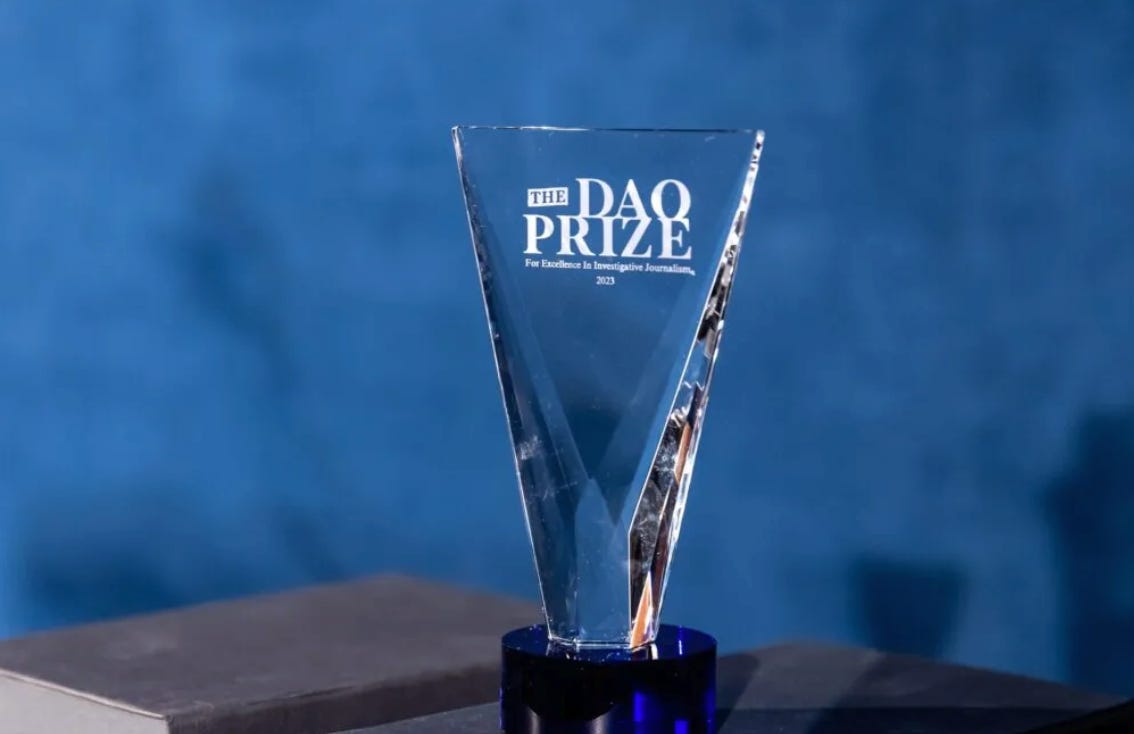
We’re exceedingly proud of our work, as well as the success we’ve had in bringing the issue of the Wikipedia Crisis to the forefront of the national (and international) conversation. On a personal level, I was honored as a recipient of the 2025 DAO Prize for the work I did on Wikipedia at Pirate Wires.
But by far our greatest achievement is that we’ve planted the seeds for a community. Our platform isn’t big (yet), but it’s growing fast.
People—like you—who have subscribed and followed NPOV have learned to cast a critical eye on the online information that shapes all of our lives. You might have acted on your intuition that something isn’t right. Or you might have knowledge of specific instances of where things are going wrong. You might simply be curious to learn more.
Either way, it’s this early community that will serve as the foundation for the project we’re building. For this, I’m deeply grateful to you.
Looking ahead, we have a lot more planned. One of our major areas of focus will be unpacking the foreign influence on Wikipedia, from state actors like China to foreign terror organizations like Hamas, to far-left edit gangs run out of Australia. The problem runs very deep.
We look forward to shining a light into all these informational crevices—and finding what’s there. While we’ll continue to focus on Wikipedia, we will begin to diversify and grow our coverage to include other platforms, which are just as susceptible to the same forces.
Wishing you a Happy New Year.
—Ashley Rindsberg
Founder & Chief Investigative Officer, NPOV